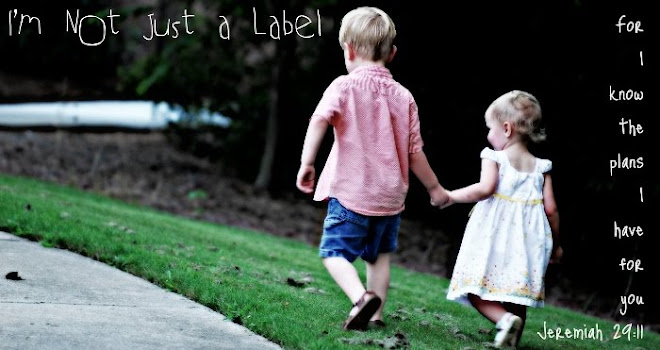
Somehow, over the last 9 months I have come to sit in a very different place than I ever have before.
I see my boy differently. I've been changed. Sorry I've been gone. I just haven't
needed this place.
One day, it all changed. I'm not so sure it was just this one thing, but I know God opened my eyes to see the treasure I get to hold in my arms each day. These words, about King Solomon, started to resonate. And I knew. I knew that I had missed it. Totally missed it. I was mourning what I wanted..... and God showed me in these beautiful words that I was looking for something regular, when what I got was a prized treasure beyond what any parent could imagine.
"And God gave Solomon wisdom and understanding beyond measure, and breadth of mind like the sand on the seashore, so that Solomon's wisdom surpassed the wisdom of all the people of the east and all the wisdom of Egypt..... He also spoke 3,000 proverbs, and his songs were 1,005. He spoke of trees, from the cedar that is in Lebanon to the hyssop that grows out of the wall. He spoke also of beasts, and of birds, and of reptiles, and of fish. And people of all nations came to hear the wisdom of Solomon, and from all the kings of the earth, who had heard of his wisdom." 1 Kings 4:29~34
One of my two beautiful treasures, he's about 4 feet tall. And oh, what a beautiful mind. Only GOD knows the measure. Now, I know Solomon was a King and he prayed for God's wisdom. I know that's different than my little one. But when I read that, I think about how different it made him. I think about the responsibility one has to hold all of that in their mind and KNOW that God wants them to use it for His purposes.
And, that is where I sit now. God gave this beautiful mind to my son. My son loves scripture, loves God so much. He opens up his Bible to a Psalm and just belts it out in praise. We've told him he should write his songs down so he can remember them, but refuses, 'It is already written down, it's right here in the Bible'.
This little boy, so unique. God made him that way. We have SUCH a responsibility.... to train him up to know what all that ability and knowledge is for.
There's a line in a favorite song, that always reminds me of my son.... and it says:
'I will not boast in anything: no gifts, no power, no wisdom
But I will boast in Jesus Christ; His death and resurrection
Why should I gain from His reward? I cannot give an answer
But this I know with all my heart: His wounds have paid my ransom'
~How Deep the Fathers Love
God doesn't give us such unique gifts so we can go flaunting them around on the things of this world. He has a very specific purpose for each of us and intends to teach us what it is, if only we will listen.
"Hear, O Israel: The LORD our God, the LORD is one. You shall love the LORD your God with all your heart and with all your soul and with all your might. And these words that I command you today shall be on your heart. You shall teach them diligently to your children, and shall talk of them when you sit in your house, and when you walk by the way, and when you lie down, and when you rise. Deuteronomy 6:4-6